The Passports, Nationality and Foreigners Affairs Authority announced the launch of a new electronic visa system through the website (evisa.gov.ly) to make the process of issuing entry visas easier and faster.
The Authority said the new system is part of Prime Minister Abdulhamid Dbeibah’s plan to expand digital government services, improve the quality of services, and reduce paperwork.
Companies and individuals applying for entry visas for foreign nationals are now required to submit their applications through the electronic platform and follow the approved steps to complete the process and receive the necessary approvals.
Libyan President Mohamed Al Menfi has officially appointed Abdulmajid Elmlegta as the new Intelligence Head for the Western Region Government.
He also appointed Abdelshafi Bouzlaa as Deputy Head of the Intelligence Service, responsible for public affairs and external communication.
The decisions are part of ongoing institutional restructuring aimed at strengthening intelligence coordination, media engagement, and external communication channels.
The Libya Development and Reconstruction Fund has announced a design competition for the entrance gates of Benghazi as part of efforts to enhance the city’s urban identity and visual character.
The project aims to create designs that reflect Benghazi’s historical and cultural significance while matching the city’s modern development vision.
The competition is open to architects, consulting firms, universities, and specialists in urban planning. Details regarding registration, submission deadlines, and evaluation criteria will be announced at a later stage.
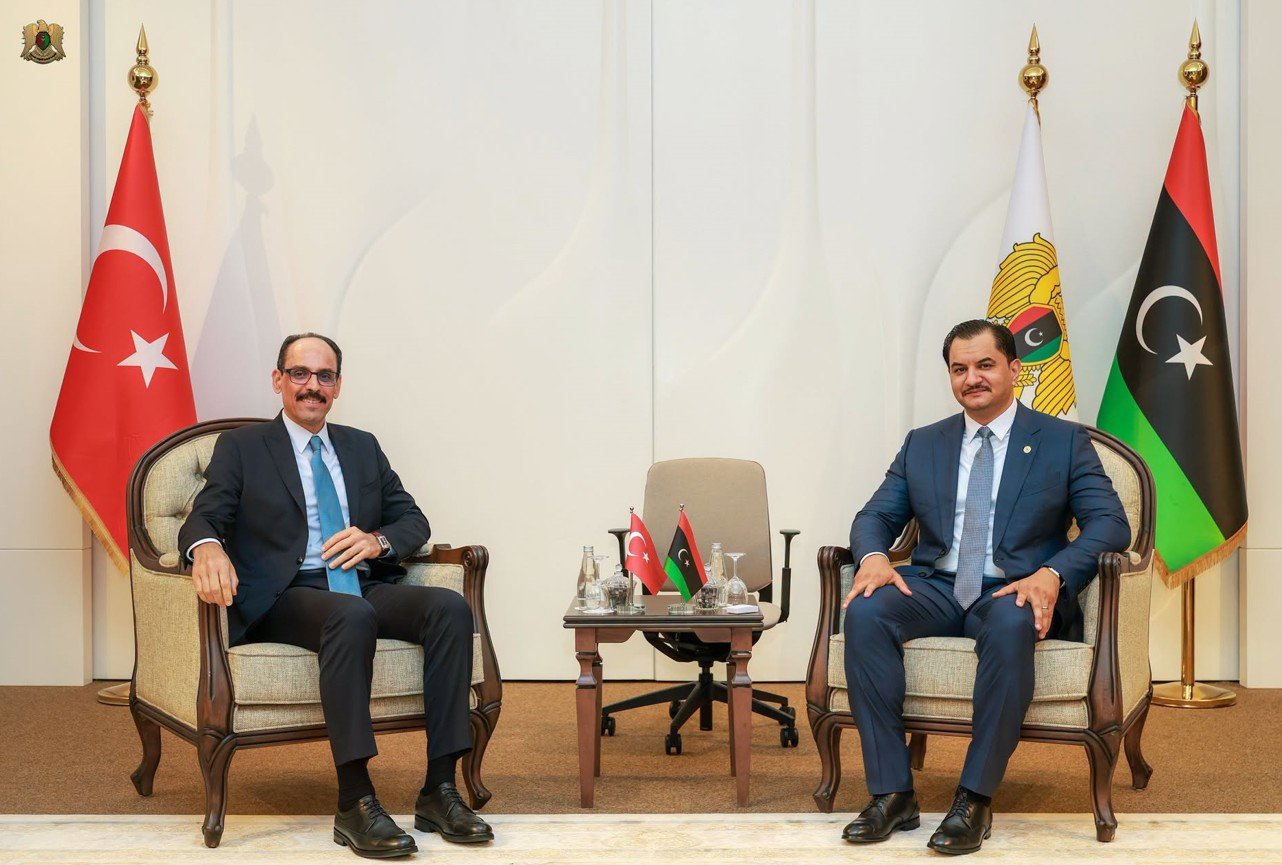
BENGHAZI – Lieutenant General Saddam Haftar, Deputy Commander-in-Chief of the Libyan Arab Armed Forces in Eastern and Southern regions, received Ibrahim Kalin, Head of Türkiye’s National Intelligence Organization (MIT), and his accompanying delegation at the General Command headquarters in Benghazi.
The visit comes shortly after the visit of Egypt’s intelligence chief to Libya, reflecting renewed engagement by key regional actors with Libyan stakeholders. Alongside Egypt, Türkiye remains one of the most influential external players in Libya’s political landscape, with a significant role in political, security, and economic affairs.
During the meeting, the two sides discussed bilateral relations and ways to strengthen cooperation in various fields. They also reviewed the latest developments in Libya and ongoing political efforts aimed at unifying state institutions, stressing the importance of advancing these efforts to achieve long-term stability and regional security.
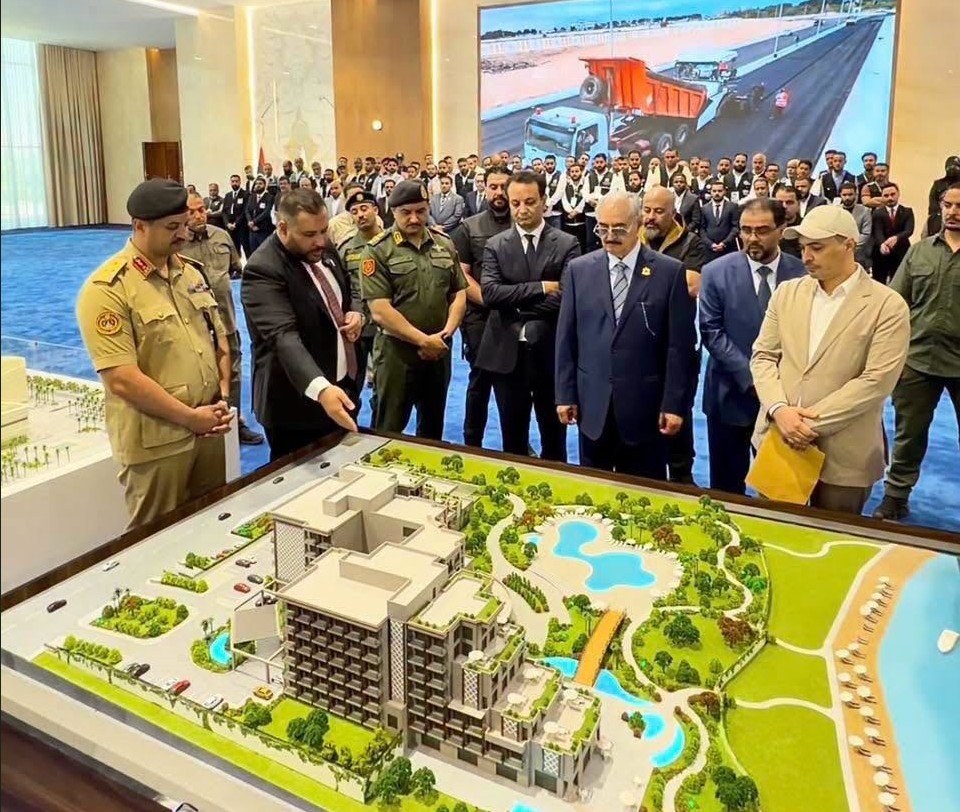
SIRTE – The city of Sirte witnessed a major official visit by Commander-in-Chief of the Libyan Arab Armed Forces, Field Marshal Khalifa Haftar, accompanied by senior officials from Eastern region government, including Lieutenant General Saddam Khalifa Haftar, Prime Minister of the Libyan Government Dr. Osama Hammad, and Director General of the Libya Development and Reconstruction Fund Engineer Belqasim Khalifa Haftar.
Sirte, known as the hometown of former Libyan dictator Muammar Gaddafi, has experienced some of the most turbulent chapters of Libya’s modern history. The city suffered heavy damage during the 2011 civil war and later became a stronghold for ISIS militants, which led to further conflicts and widespread destruction. In the years following the fall of the previous regimes, Sirte remained heavily ignored & affected by instability.
Today, under the current Eastern-based Government, the city is witnessing a renewed wave of reconstruction and development projects aimed at reshaping its future and restoring its infrastructure.
The visit focused on reviewing ongoing reconstruction and development work in Sirte, where officials highlighted more than 200 projects being implemented through the National Development Authority, a key development Institution Under Eastern region government to improve infrastructure, public services, and urban planning.
During a ceremony held at the Sirte Conference Complex, a new package of strategic projects was announced, including the Khalifa Medical City, a major integrated healthcare complex, the Sirte Central Oncology Hospital, a new oncology center in Sabha, and the Ben Jawad Accident and Maternity Hospital.
Additional projects include the new headquarters of the Central Bank of Libya in Sirte, the Sirte International Equestrian Track, the Green Mountain International Stadium, and the Imam Malik Mosque project. The plan also covers the expansion of the Sirte water treatment plant to increase capacity, along with a strategic oil depot aimed at strengthening fuel supply and energy security in the central region.
Officials described these projects as part of one of the largest development initiatives the city has seen in decades, presenting them as a broader effort to rebuild infrastructure, improve services, and reinforce stability and economic activity in Sirte and surrounding areas.
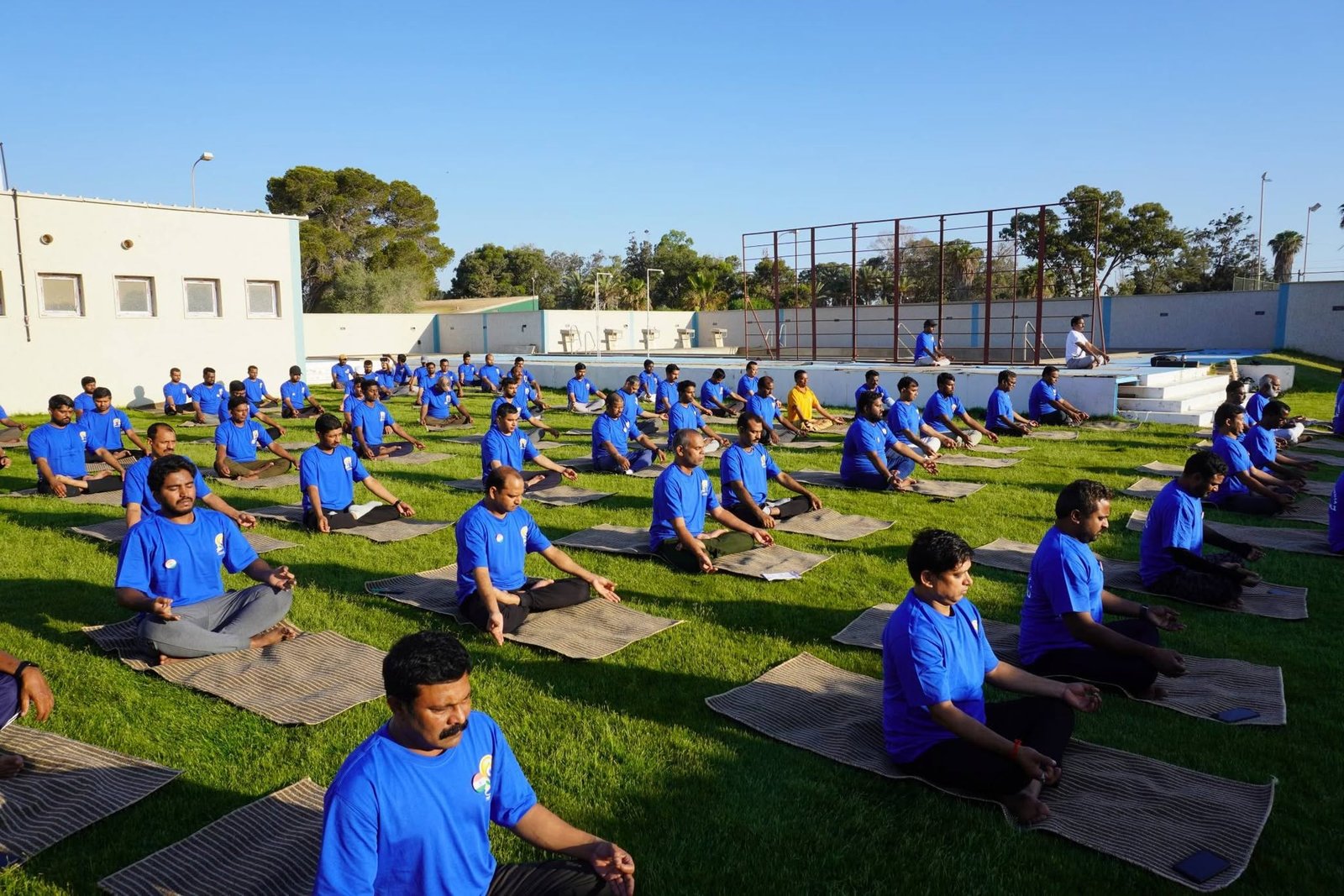
The Embassy of India in Tripoli organized the 12th International Day of Yoga (IDY2026) celebration in Misrata for the first time, under the theme “Yoga for Healthy Aging.”
The event brought together more than 100 participants of different ages who took part in yoga sessions promoting health and wellbeing. Indian Ambassador Dr. Hifzur Rahman addressed the gathering, highlighting the benefits of yoga in daily life.
The embassy also expressed appreciation to the Libyan Iron and Steel Company (LISCO) and its Indian partners, particularly First Global Engineering, for supporting the organization of the event.
TRIPOLI – Libya’s three highest governing bodies signed a landmark principles document on Tuesday, June 16, 2026, agreeing on a clear roadmap to end the country’s transitional phase and hold national elections no later than February 17, 2027.
The agreement was reached on Tuesday, June 16, 2026, during a joint meeting held via Zoom between Aguila Saleh, Speaker of the House of Representatives , the Eastern Region’s legislative body, Mohamed Takala, Head of the High Council of State, the Western Region’s consultative assembly, and Dr. Mohamed Al-Menfi, Chairman of the Presidential Council, the country’s collective head of state.
The three Libyan councils said the roadmap was driven by concerns over national security, financial stability, territorial integrity, and control over natural resources, while warning of foreign interference and changing regional and international conditions.
The agreement is based on Libya’s existing legal framework, including the Constitutional Declaration, the 2015 Political Agreement, and previous understandings reached during the Cairo tripartite meeting under the Arab League.
The roadmap’s main focus is holding simultaneous presidential and parliamentary elections by February 17, 2027, under the supervision of a high-level committee including representatives from financial, electoral, military, and security institutions.
The electoral laws will be completed by the 6+6 Committee and submitted to the House of Representatives for approval. The agreement also includes a future constitutional amendment requiring the elected president to launch a national dialogue process aimed at completing a permanent constitution and ending Libya’s prolonged transitional period.
The agreement adopts the 2020 Bouznika Agreement as the framework for appointing and reunifying Libya’s key sovereign positions. It also adds the National Oil Corporation and Libyan Foreign Investments to the list of protected sovereign institutions, ensuring their unity, independence, and neutrality.
The economic reforms focus on protecting Libya’s national wealth and financial sovereignty by rejecting foreign interests in state assets, preventing the release of frozen funds until an elected president takes office, and opposing policies that could harm the economy or national interests.
The roadmap also introduces stronger oversight of the oil, gas, water, and minerals sectors, confirms the National Oil Corporation’s role in managing resource marketing, and maintains the Central Bank of Libya’s authority over revenues. A joint committee will prepare a unified 2027 budget to address Libya’s long-running financial divisions.
The agreement comes at a moment of renewed international engagement with Libya. Massad Boulos, adviser to U.S. President Donald Trump on Middle East and African affairs, recently told the Financial Times that Washington is actively working to broker a power-sharing arrangement between Libya’s rival eastern and western governments. Boulos also confirmed that major American oil companies, including ConocoPhillips and Chevron, have already signed agreements with Libya in 2026, and expressed confidence that Libya’s oil production could double to three million barrels per day by the end of the decade.
This principles document represents the most serious and substantive political convergence Libya has witnessed in years. For the first time, the country’s three rival governing bodies have aligned, on paper , around a single timeline, a shared legal framework, and a set of binding economic commitments. Whether this agreement translates into action will depend on the political will of all parties in the months ahead. But as a statement of intent, it marks a turning point that Libya, and the region, cannot afford to ignore.