Libya Sets February 17, 2027 as Election Date as Three Councils Sign Historic Roadmap Agreement

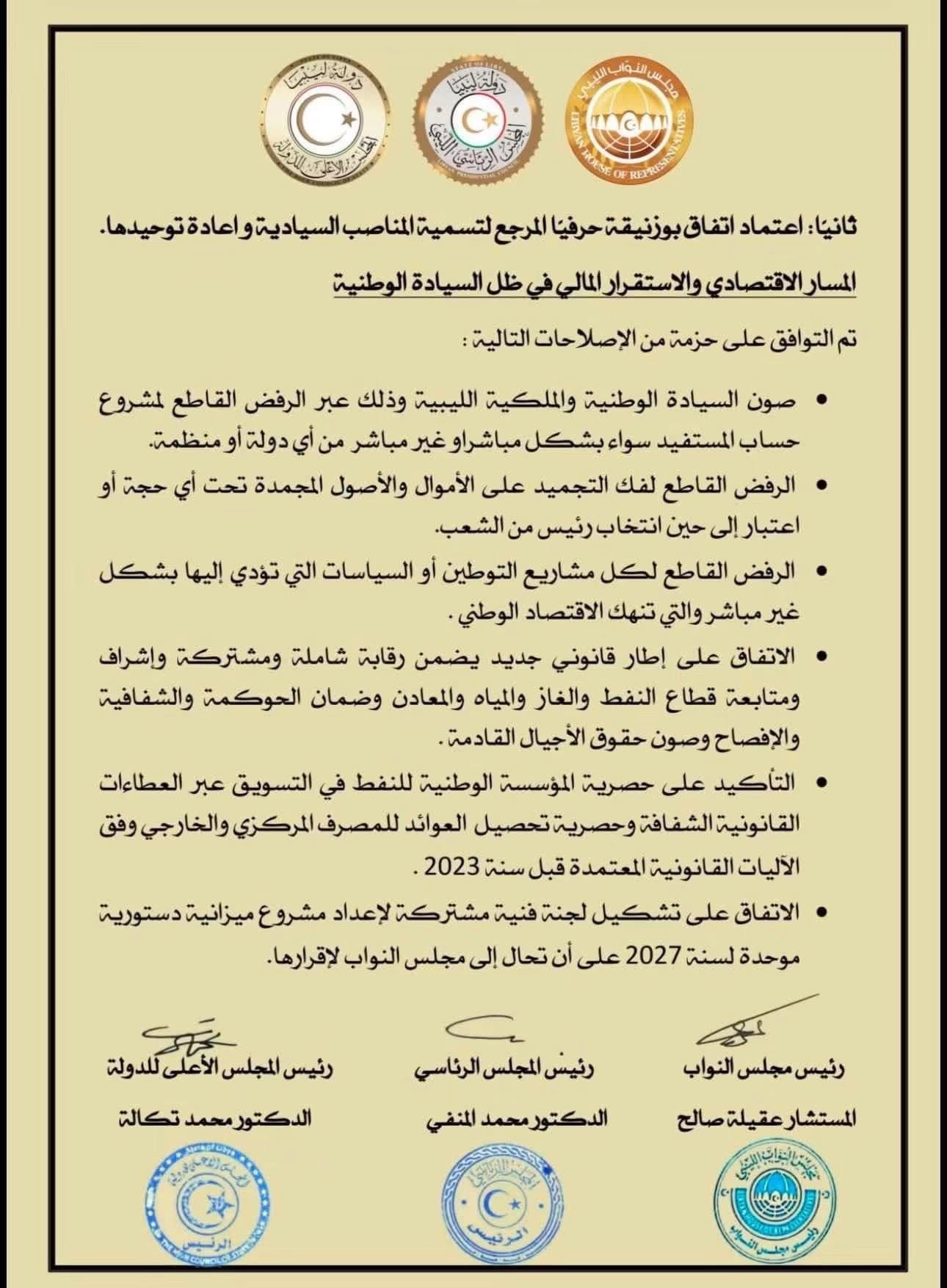
TRIPOLI – Libya’s three highest governing bodies signed a landmark principles document on Tuesday, June 16, 2026, agreeing on a clear roadmap to end the country’s transitional phase and hold national elections no later than February 17, 2027.

The agreement was reached on Tuesday, June 16, 2026, during a joint meeting held via Zoom between Aguila Saleh, Speaker of the House of Representatives , the Eastern Region’s legislative body, Mohamed Takala, Head of the High Council of State, the Western Region’s consultative assembly, and Dr. Mohamed Al-Menfi, Chairman of the Presidential Council, the country’s collective head of state.

The three Libyan councils said the roadmap was driven by concerns over national security, financial stability, territorial integrity, and control over natural resources, while warning of foreign interference and changing regional and international conditions.

The agreement is based on Libya’s existing legal framework, including the Constitutional Declaration, the 2015 Political Agreement, and previous understandings reached during the Cairo tripartite meeting under the Arab League.

The roadmap’s main focus is holding simultaneous presidential and parliamentary elections by February 17, 2027, under the supervision of a high-level committee including representatives from financial, electoral, military, and security institutions.

The electoral laws will be completed by the 6+6 Committee and submitted to the House of Representatives for approval. The agreement also includes a future constitutional amendment requiring the elected president to launch a national dialogue process aimed at completing a permanent constitution and ending Libya’s prolonged transitional period.

The agreement adopts the 2020 Bouznika Agreement as the framework for appointing and reunifying Libya’s key sovereign positions. It also adds the National Oil Corporation and Libyan Foreign Investments to the list of protected sovereign institutions, ensuring their unity, independence, and neutrality.

The economic reforms focus on protecting Libya’s national wealth and financial sovereignty by rejecting foreign interests in state assets, preventing the release of frozen funds until an elected president takes office, and opposing policies that could harm the economy or national interests.

The roadmap also introduces stronger oversight of the oil, gas, water, and minerals sectors, confirms the National Oil Corporation’s role in managing resource marketing, and maintains the Central Bank of Libya’s authority over revenues. A joint committee will prepare a unified 2027 budget to address Libya’s long-running financial divisions.

The agreement comes at a moment of renewed international engagement with Libya. Massad Boulos, adviser to U.S. President Donald Trump on Middle East and African affairs, recently told the Financial Times that Washington is actively working to broker a power-sharing arrangement between Libya’s rival eastern and western governments. Boulos also confirmed that major American oil companies, including ConocoPhillips and Chevron, have already signed agreements with Libya in 2026, and expressed confidence that Libya’s oil production could double to three million barrels per day by the end of the decade.

This principles document represents the most serious and substantive political convergence Libya has witnessed in years. For the first time, the country’s three rival governing bodies have aligned, on paper , around a single timeline, a shared legal framework, and a set of binding economic commitments. Whether this agreement translates into action will depend on the political will of all parties in the months ahead. But as a statement of intent, it marks a turning point that Libya, and the region, cannot afford to ignore.
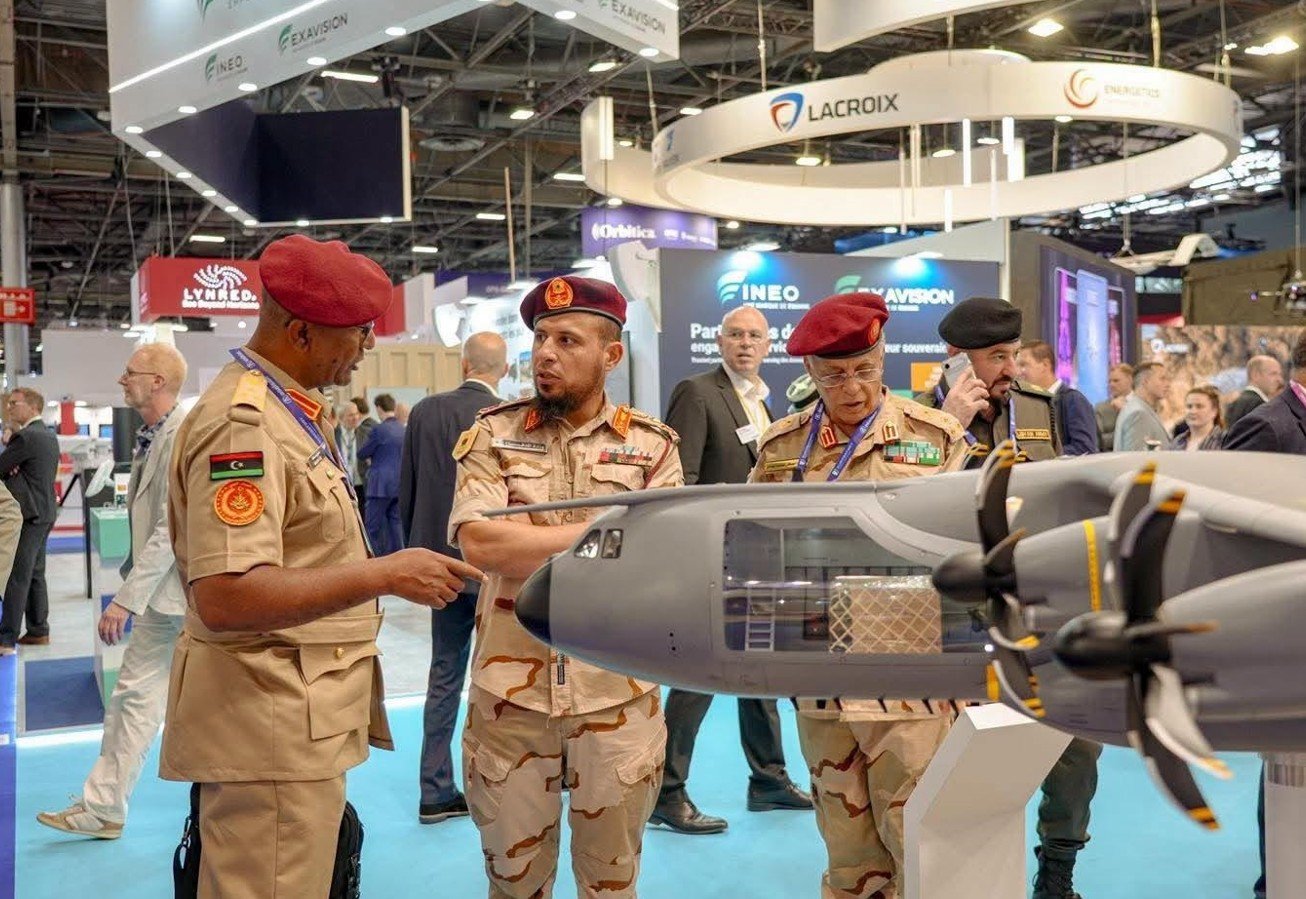
Libyan Military Intelligence Chief Participates in IDEX Paris and Holds High-Level Meetings

PARIS – Lieutenant General Mahmoud Hamza, Commander of Brigade 444 under the Western Region Government and Director of Military Intelligence, participated in the International Defense and Security Exhibition (IDEX) in Paris.

During the visit, he attended the opening ceremony and held several high-level meetings with French defense officials, including the Minister of Defense and senior military commanders, as well as representatives from Turkey, Chad, Mauritania, and Italy.

Discussions focused on strengthening military and security cooperation, regional stability, and exchanging expertise between Libya and partner countries.

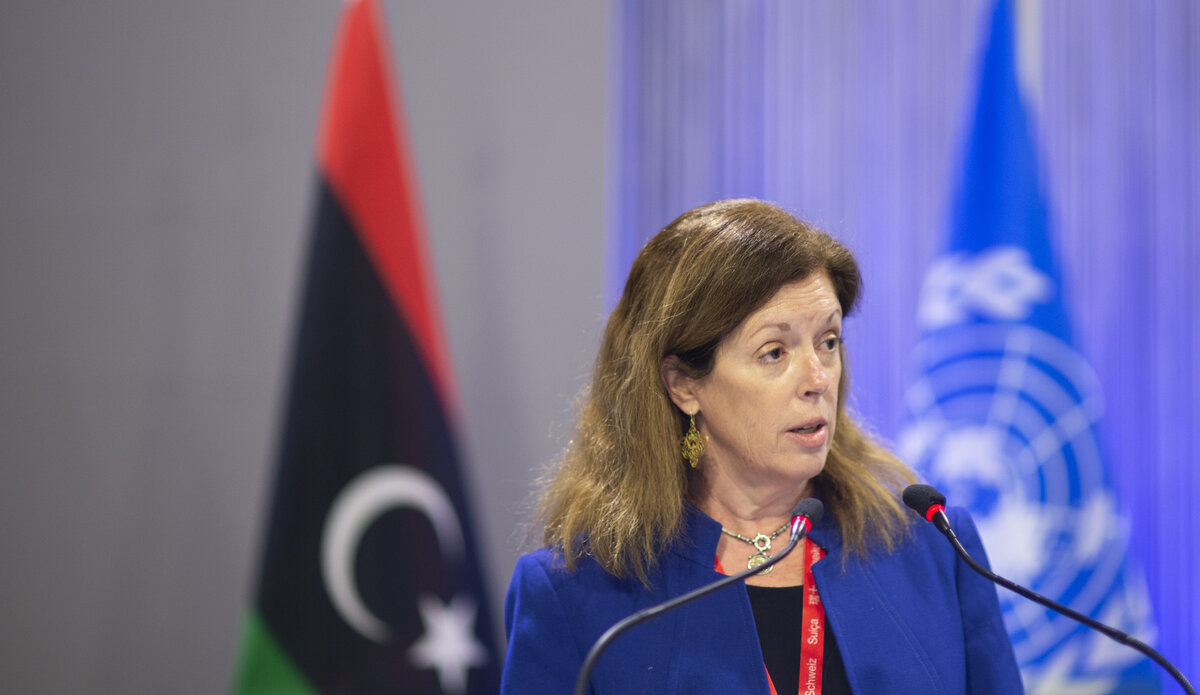
Stéphanie Williams, a former adviser to the UN Secretary-General in Libya, highlighted the ongoing issue of armed faction fragmentation in western Libya, particularly in Tripoli.

Stéphanie Williams, a former adviser to the UN Secretary-General in Libya, highlighted the ongoing issue of armed faction fragmentation in western Libya, particularly in Tripoli.

She identified three main groups exerting control: the Deterrence Apparatus for Combating Terrorism and Organized Crime, known for human rights violations; the Support and Stability Apparatus, led by Abdul-Ghani Al-Kikli Ghneiwa; and Brigade 444. Williams pointed out that these militias maintain their grip on state institutions, abusing their powers for arrests, surveillance, and detentions to suppress opposition and avoid accountability.

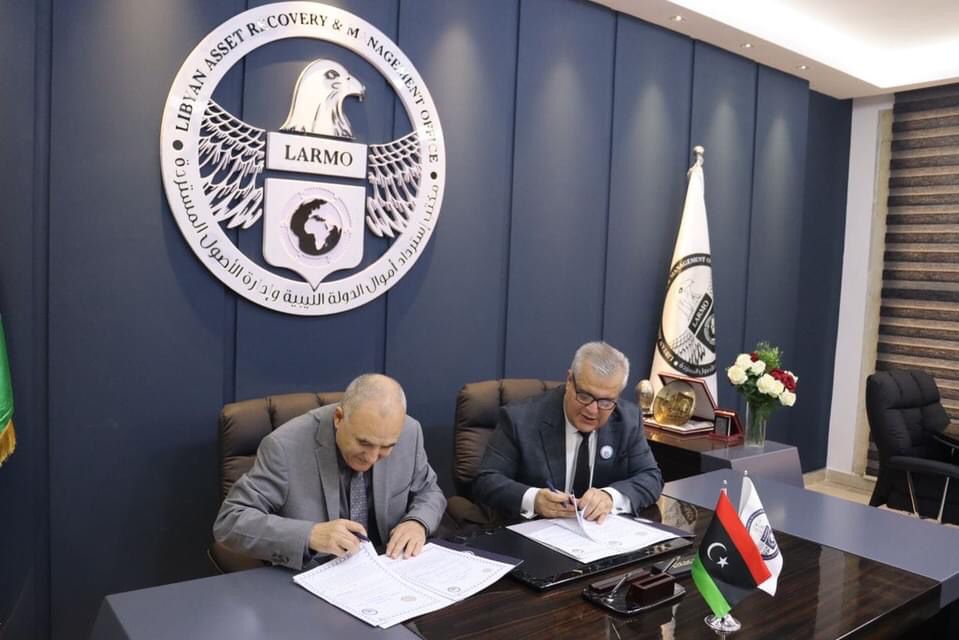
The Libyan State Funds Recovery and Assets Management Office (LARMO) and the Libyan Counter-Terrorism Center signed a memorandum of understanding in Tripoli

The Libyan State Funds Recovery and Assets Management Office (LARMO) and the Libyan Counter-Terrorism Center signed a memorandum of understanding in Tripoli to enhance joint efforts in combating terrorism and money laundering. The agreement, signed by Muhammad Al-Mansali of LARMO and Major General Muhammad Bashir of the Counter-Terrorism Center, aims to strengthen cooperation in recovering illegally obtained funds and confronting security and financial challenges. Both Al-Mansali and Bashir emphasized the importance of this partnership in achieving national security and economic goals in Libya.

NOC signs MoU with Norwegian Equinor to evaluate maritime oil and gas potential and train Libyan youth

he Chairman of the National Oil Corporation (NOC), Farhat Bengdara, signed a memorandum of understanding with the Norwegian company Equinor.

The memorandum aims to study and evaluate the oil and gas potential in the Libyan maritime region.

The signing took place today at the NOC’s Tripoli headquarters and includes plans to train young national personnel in the oil and gas sector.

The NOC said Equinor, a leading Norwegian company in offshore oil and gas exploration and drilling, is a key partner in this endeavour.

What is the Gaza Strip & who controls it ?

What is the Gaza Strip & who controls it ?

The Gaza Strip has been the epicenter of heavy bombardment for more than a week after Israel launched retaliatory airstrikes for the unprecedented terror attack by Palestinian militant group Hamas on Oct. 7.

The enclave — a narrow strip of land between Israel and Egypt, next to the Mediterranean Sea — is home to roughly 2.3 million Palestinians and is described as one of the most densely populated places on Earth. The 140-square-mile region is roughly the size of Philadelphia.

The majority of those who live in Gaza are young, with almost 65% of the population under the age of 24

‘World’s largest open-air prison’

Since 2007, Israel has imposed an air, land and sea blockade on the Gaza Strip, saying the move is necessary to safeguard the country from Hamas’ attacks. Gaza is surrounded by concrete walls and barbed wire fences.

Palestinians are prohibited from entering or leaving the territory except in extremely rare cases such as “urgent, life-threatening medical conditions,” according to Israeli human rights group B’Tselem. Foreign citizens are not subjected to the same restrictions. Human rights groups have described it as “the world’s largest open-air prison.”